Home › Research › Sports Wind Tunnel
Sports Wind Tunnel Technology
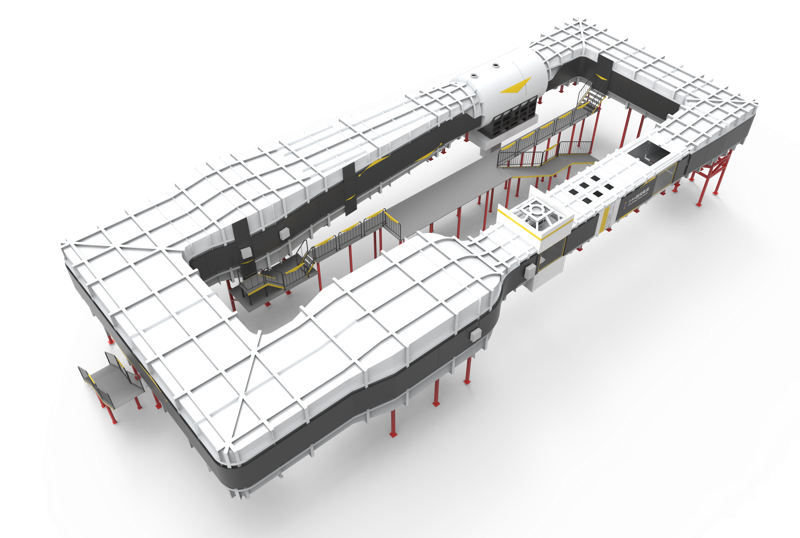
Small-scale, low-noise wind tunnel technology built for sports — measuring the air an athlete moves through, and the equipment that moves with them.
Air resistance dominates performance in cycling, running, speed skating, skiing and racket sports, yet a full-size civil-engineering tunnel is the wrong instrument for a human in motion. The Joint Laboratory develops small-scale wind tunnel technology that reaches sports-relevant speeds while keeping background noise low enough for comfortable, repeatable testing with live participants.
Low noise matters for more than courtesy. Quiet flow means a cleaner measurement of aerodynamic drag and of the sound an item of equipment makes, and it makes it practical to run longer sessions with athletes, coaches and designers present in the room.
What the work covers
- Aerodynamic drag and lift of athletes in racing positions, and of complete bicycles, helmets, wheels and suits.
- Drafting, overtaking and group-riding effects, measured at the yaw angles seen in real racing.
- Ball and shuttlecock flight: aerodynamic forces, seams and surface texture, and how a product behaves across its working speed range.
- Apparel and surface treatments, evaluated against the flow they will actually meet rather than a nominal specification.
- Aeroacoustics of sports equipment, using the Laboratory's acoustic laboratory alongside the tunnel.
How it is done
Each campaign pairs measurement with simulation. Force-balance and flow-visualisation data from the tunnel establish what happens; computational fluid dynamics explains why, and lets a design be screened before it is manufactured and tested. The two are reconciled against each other, so a result carries an experimental record and a model behind it.
Smoke and tuft visualisation make the flow legible to the people who have to act on it — athletes and coaches deciding between two positions, and designers deciding between two shapes.