Home › Research › Materials & Ergonomics
Materials Science & Human Ergonomics
What sports equipment is made of, how that material behaves under load, and how the finished product fits the human body that has to wear it.
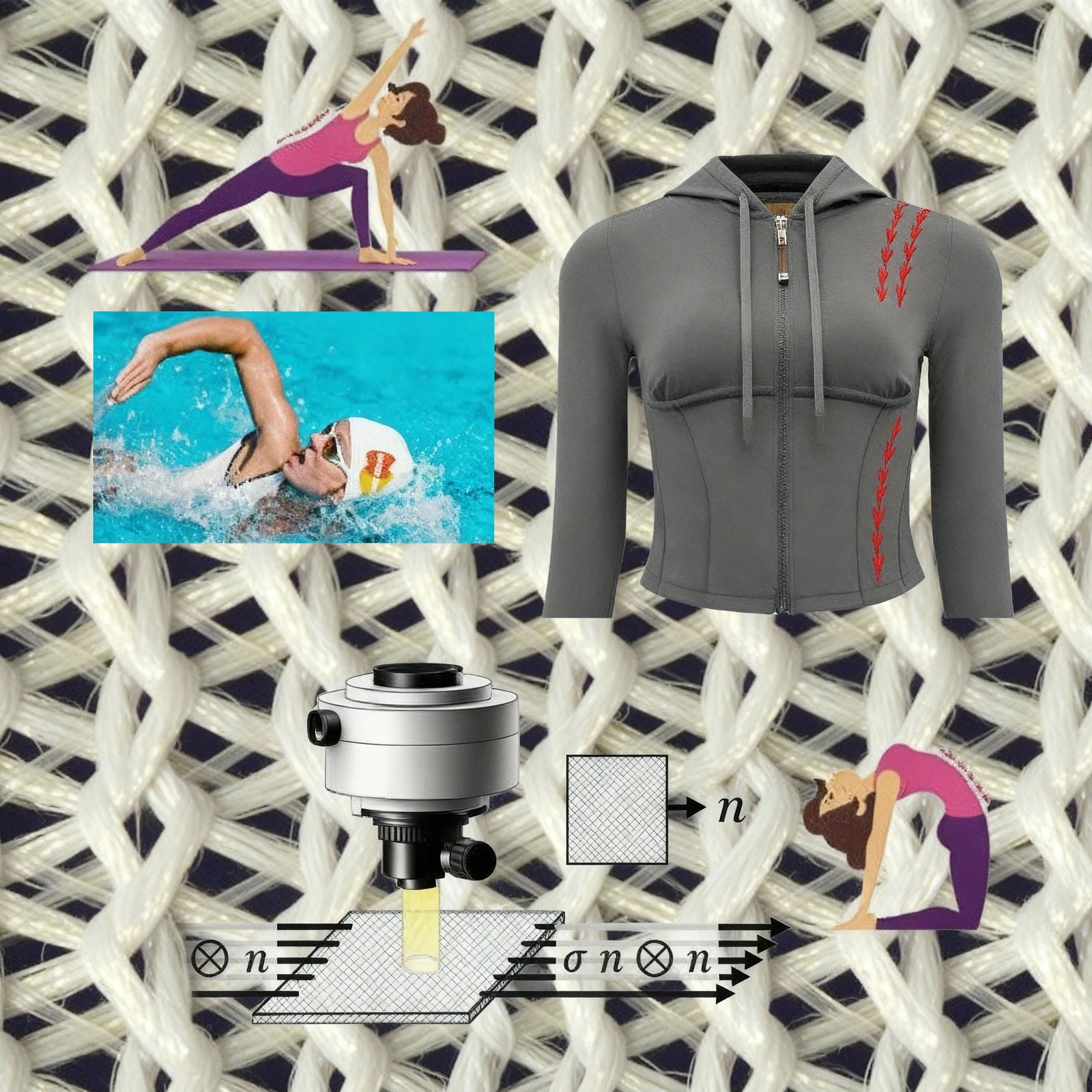
Sports equipment is a stack of material decisions: a foam that must return energy and still protect, a fabric that must breathe, hold its shape and shed water, a composite that must be stiff in one direction and compliant in another. Each of those behaves differently after ten hours of use than it did on the first, and differently again at a different temperature or humidity.
This area of the Joint Laboratory studies materials and ergonomics together, because in sport they cannot be separated. A shoe midsole is a materials problem until it is on a foot, at which point it becomes an interface problem: how load is spread, how the joint above it moves, and whether the athlete can still do what they were trying to do.
What the work covers
- Characterisation of sports textiles, foams, elastomers and composites under the loading, cycling and environmental conditions they will meet.
- Mechanics and dynamics of materials: how a structure stores, returns and dissipates energy, measured rather than assumed.
- Ergonomic fit and interface pressure — how a helmet, shoe, guard or garment sits on a body in motion, and where it fails.
- Impact protection and injury biomechanics, balancing what a device absorbs against what it costs in weight, heat and mobility.
- Durability and ageing, so a product's stated performance still holds at the end of its service life.
- Materials innovation for equipment design, carried through from candidate material to tested prototype.
Equipment design
The Joint Laboratory's remit is the translation of research into product, so material and ergonomic findings enter the design process rather than ending in a report. A study is judged by whether it changed a shape, a layup, a size run or a specification — and by whether the change can be defended with measurement.